okretro.au
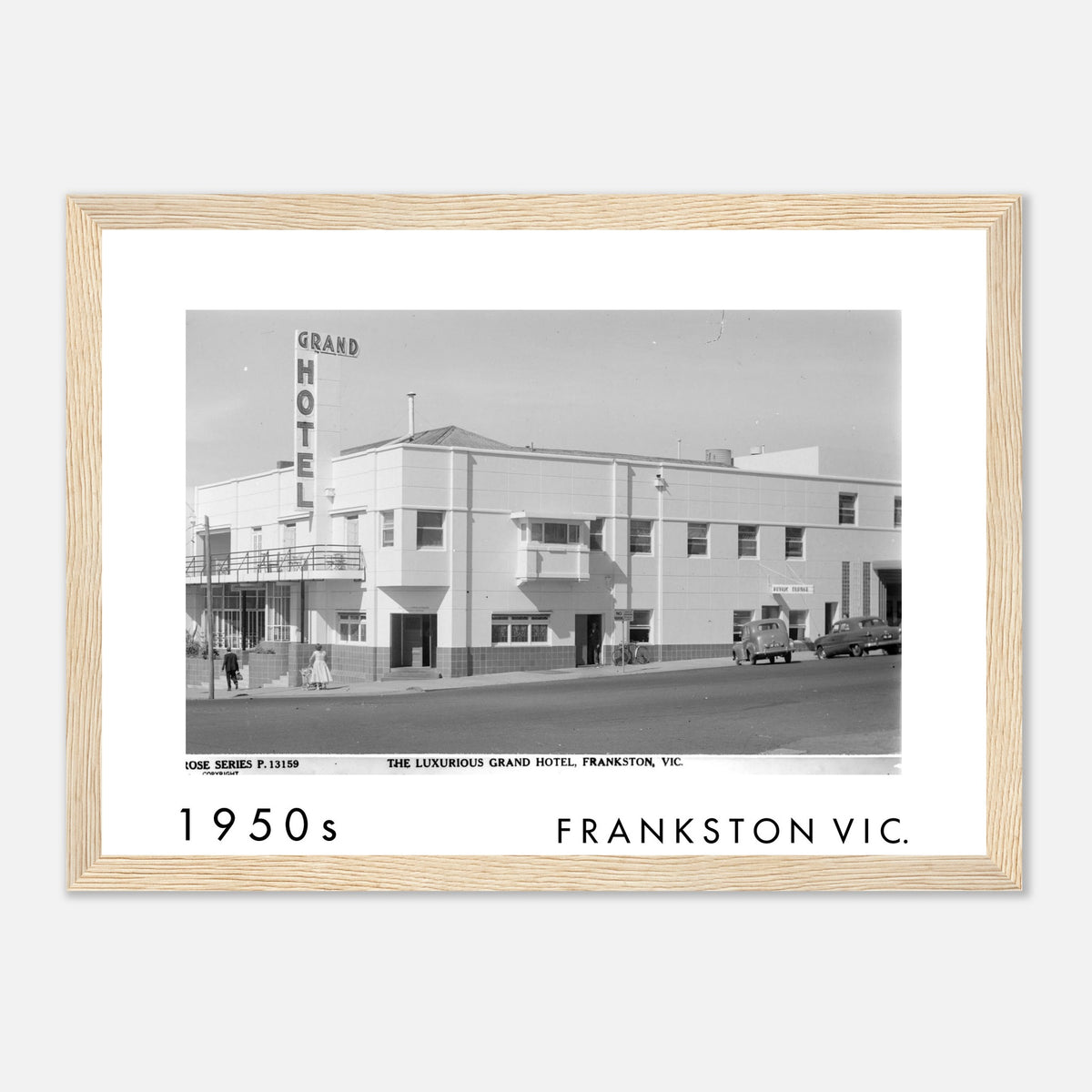
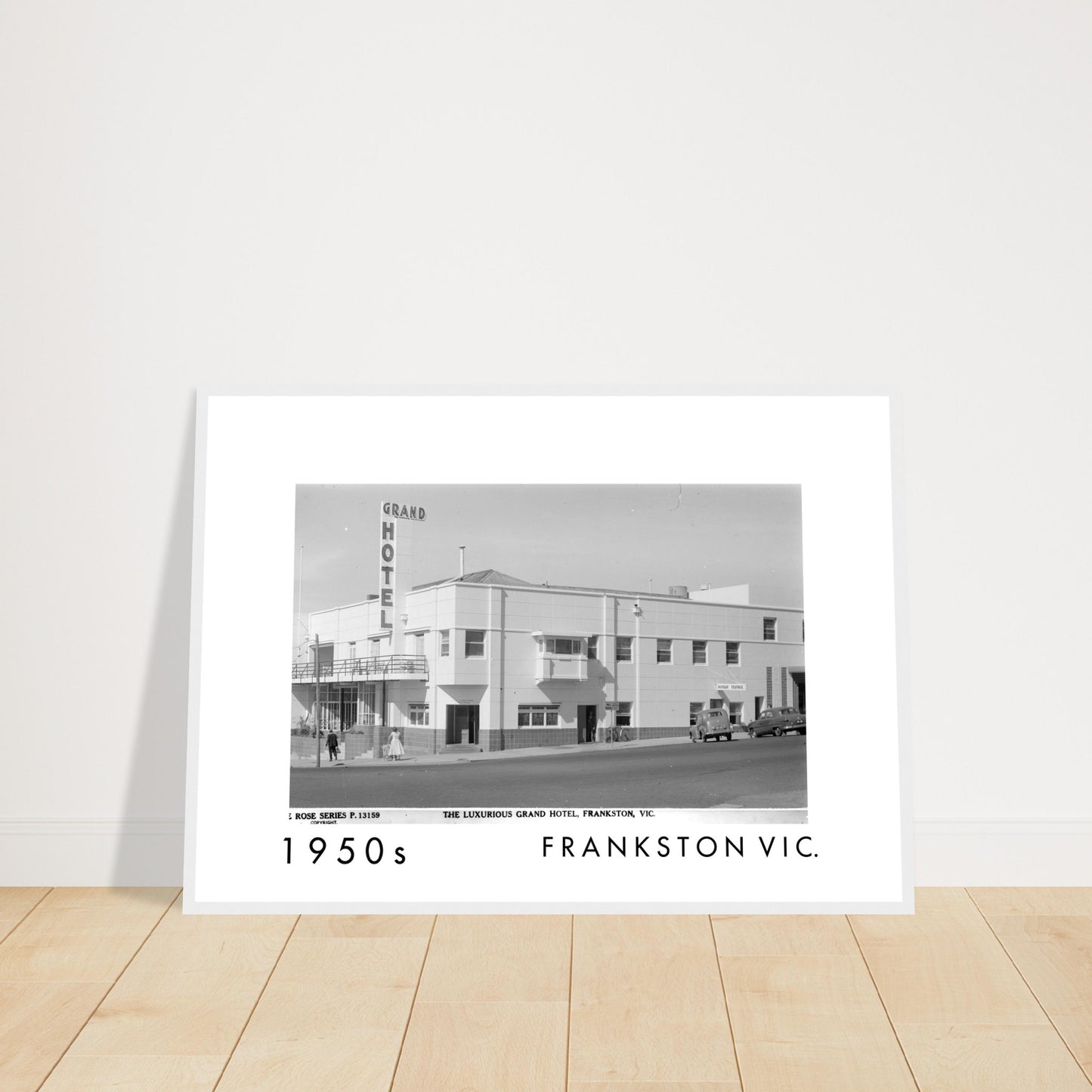
Grand Hotel, Frankston VIC c.1950s
Looking for a smaller option?
30 × 40 cm Print Only – $69
Couldn't load pickup availability
Professionally printed to order on premium heavyweight matte paper and framed in sustainably sourced pine wood. Each print is carefully packaged and shipped free Australia-wide, bringing iconic Australian history into your home with museum-quality presentation.
Specifications
- Premium heavyweight matte paper (170 gsm)
- Sustainably sourced pine wood frame
- Crystal-clear shatter-resistant plexiglass
- Printed using archival-quality inks for exceptional detail and longevity
- Ready to hang with pre-installed sawtooth hanging hardware
- Professionally printed and framed to order
- Carefully packaged for secure delivery
- Free shipping Australia-wide
Every historic photograph has a story. Explore its history, provenance and historical significance below.
Story Behind the Photograph
Standing proudly on the corner of Nepean Highway in the heart of Frankston, the Grand Hotel has been part of the town's story for generations. Originally established as the Bay View Hotel in the late nineteenth century, the building evolved alongside Frankston as the small coastal settlement grew into one of Victoria's best-known seaside destinations.
Captured during the 1950s, this photograph reflects an era when the Mornington Peninsula was becoming increasingly popular with holidaymakers escaping Melbourne for weekends by the beach. The Grand Hotel was more than just a place to stay—it was a social hub where locals gathered, visitors dined, and travellers paused on their journey along the peninsula.
Carefully restored from an original archival photograph, this image preserves not only the distinctive architecture of the Grand Hotel but also a glimpse into everyday life during Australia's post-war years.
Photograph Details
Photograph Details
Title: Grand Hotel, Frankston VIC c.1950s
Location: Frankston, Victoria, Australia
Date: c.1950s
Original Name: Bay View Hotel
Publisher: Rose Postcard Co., Melbourne
Original Source: Rose Postcard Co. photographic postcard
Photographer: Unknown (where not recorded)
Copyright Status: Original copyright has expired.
Restoration: Professionally restored from an original archival postcard to preserve the character and detail of the historic photograph while preparing it for modern museum-quality reproduction. Acknowledgement: This reproduction is created from an original postcard published by the Rose Postcard Co. We proudly acknowledge the work of George Rose, the Rose Postcard Company, and the generations of the Cutts family who preserved this remarkable photographic legacy. While the original copyright has expired, we believe the creators of these historic images deserve ongoing recognition for their contribution to Australia's visual history.
Historical Notes & Context
The Grand Hotel has been one of Frankston's most recognisable landmarks for well over a century. Originally established as the Bay View Hotel in the late nineteenth century, it reflected the town's growing importance as a seaside destination on the shores of Port Phillip Bay.
By the 1950s, when this photograph was published, Frankston had evolved from a quiet coastal settlement into a thriving holiday destination. Improved road access and the post-war boom encouraged thousands of Victorian families to visit the Mornington Peninsula, with the Grand Hotel becoming a familiar meeting place for locals, travellers and holidaymakers alike.
The hotel has witnessed generations of change, from horse-drawn transport and steam trains to the rapid suburban growth that transformed Frankston into one of Melbourne's major coastal communities. Today, it remains an enduring reminder of the town's rich history and its connection to Victoria's seaside heritage.
Did You Know?
Did You Know?
During the 1950s, postcard publishers like the Rose Postcard Co. produced thousands of photographic postcards capturing Australian towns, landmarks and everyday life. Today, these postcards provide an invaluable visual record of places that have changed dramatically over time.